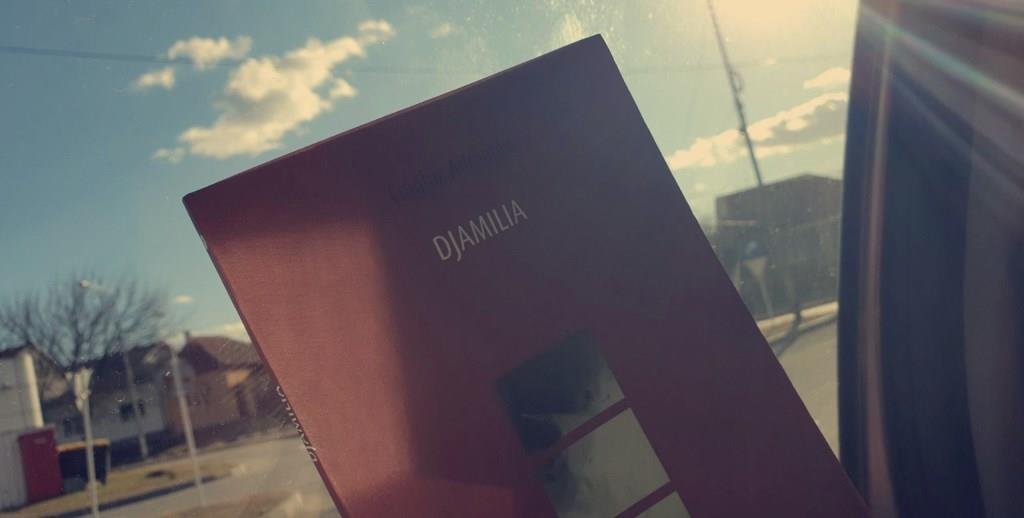
Cinghiz Aimatov – Djamilia, o iubire clandestină este o recomandare de lectură pe care am primit-o și, până la acest roman, recunosc că nu citisem nimic de niciun reprezentant al acelei țări.
Cinghiz Aimatov – „Djamilia”, a clandestine love is a reading recommendation that I received and, until this novel, I admit that I had not read anything from any representative of that country.
Because of this, I wanted to not give up the chance to broaden my literary horizon, trying something new. And I wasn’t sorry!
Cinghiz Aimatov (1928-2008) was one of the most prominent Kyrgyz writers, embodying a literary voice of the Kyrgyz nation, reminding me a little of Octavian Goga.
From the very beginning, this reading fascinated me with its well-chosen words and its harmony, being a living matter, taken from the writer’s soul, placed on the page, and from there in the mind of the reader. The coherence of the novel is overwhelming, each paragraph paints the events much more than it seems at first glance; everything is impregnated in the reader’s mind, so that you can easily see everything, and feel everything, transported in the fascinating steppe, in the middle of that Kyrgyz community during the war.
Aitmatov captures with the help of talent and the simplicity of the sentences the deep love story that has at its two ends a submissive married Djamilia and a mysteriously wounded soldier, Daniar.
In Soviet Kyrgyzstan, during World War II, there are hard times; the men sent to the front had taken the path of the armies, and the women had to do the work of the men and work side by side with those who remained at home, where the traditions inherited from their ancestors are strictly observed.
In a village where all the inhabitants were related, Djamilia also lived in her mother-in-law’s house, a lively girl, always cheerful, with a smile on her face. Her mother-in-law, a well-groomed housekeeper, sees in her the one who will take her place when the powers that be leave her.
Djamilia and Seit (the younger brother of the man with whom Djamilia had married 15 years old) go daily to the grain warehouse with the cart full, to carry the grain quotas for the soldiers’ food, being also in charge of taking care of his sister-in-law.
The whole novel is told from the perspective of the lover Seit, a teenage painter, who remembers the buds of this unfulfilled love, as he looked at it.
Everything takes a different turn when a crippled soldier, Daniar, returns to his native village and is assigned to work with the two. He was born in that village, but left there as a child after being orphaned, and was now looked upon with pity by the villagers.
The two joke a lot about Daniar, make fun of him, being very interesting how the love story between Djamilia and Daniar grows: a look, a gesture, a joke, a song – all under the eyes of Seit, who becomes an accomplice, promising to protect Djamilia at all costs. It is also interesting to dive into that depopulated mystical village, where the mountain meets the desert to give birth to pure love.
In time, the two fall in love, instilling condemnable feelings between them, but they live the best moments of their lives, trying to forget the hard work and get over the unspoken love as if they were living in peacetime.
Eventually, the two lovers run away together, before Djamilia’s husband comes from the front, leaving Seit alone to face the anger of his family and the village, with a sharp pain and a crazy longing to start. painted, to put the two on the sheet of paper, painting the greatest unfulfilled love of his life.
I won’t tell you more, I’ll let you discover this amazing story for yourself. I tried to convey a part of what I gathered in my soul after reading, the enthusiasm and the turmoil that the book subjected me to.
I’m sure it will attract you from the first pages! I hope you will feel that joy that I felt!
Read Djamilia and you will discover what I could not say
LINK: https://logopaper.com/2020/03/16/andrea-podaru-o-iubire-clandestina/






 Journalist_blog